
How to Set Up an Efficient Drip Irrigation System for Home Gardens?
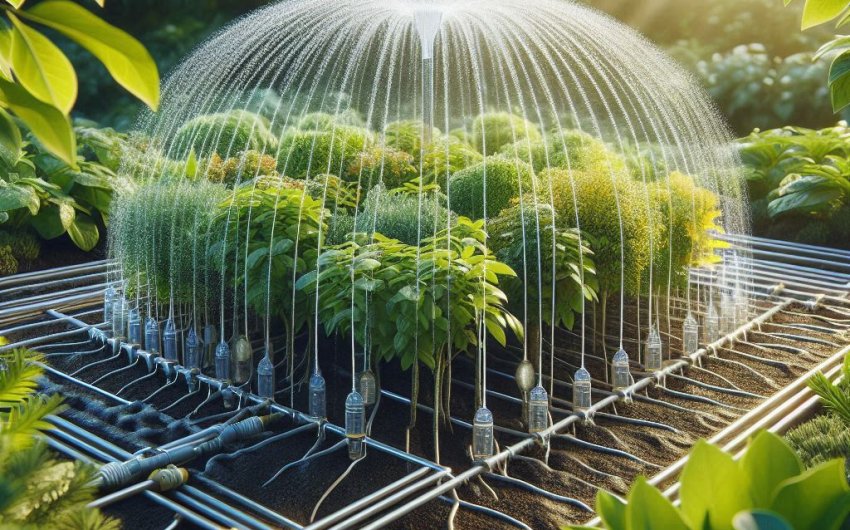
Watering your garden can be a big job. Hoses are heavy, sprinklers waste water, and hand-watering takes forever. What if there was a way to give your plants exactly what they need, right where they need it, with less effort and less waste? That's where a drip irrigation system comes in! It's like a gentle rain specifically for your plant roots. Setting one up might seem complicated, but it's actually quite simple once you know the basics. Let's explore how to bring this amazing water-saving technology to your own home garden.
What is Drip Irrigation and Why Should I Use It?
Drip irrigation, also known as trickle irrigation, is a watering method that delivers water slowly and directly to the plant's root zone. Instead of spraying water everywhere like a sprinkler, it drips water precisely where it's needed.
How Does Drip Irrigation Work?
At its simplest, a drip irrigation system involves a main water line connected to smaller tubes. These smaller tubes have tiny holes or special emitters that release water drop by drop. This slow, steady delivery allows the water to soak deep into the soil, directly reaching the plant's roots without much runoff or evaporation. It's much more efficient than traditional watering methods.
What Are the Big Benefits for My Garden?
Using a drip irrigation system offers many advantages for home gardeners:
- Saves Water: This is perhaps the biggest benefit. Drip systems deliver water precisely, reducing evaporation and runoff. This means you can use \(30\)\% to \(50\)\% less water than with sprinklers or hand-watering. This is great for your water bill and the environment.
- Healthier Plants: Plants love consistent moisture. Drip irrigation prevents the "feast or famine" watering cycle that can stress plants. Water goes right to the roots, encouraging deep root growth and healthier plants. It also prevents leaves from getting wet, which reduces the risk of fungal diseases.
- Weed Reduction: Since water only goes to your plants, the soil between plants stays drier. This discourages weeds from growing, as they don't get the water they need to sprout and thrive. Less water for weeds means less weeding for you!
- Saves Time and Effort: Once set up, a drip system runs on its own, especially if you add a timer. No more dragging hoses or standing around watering. You can water your garden while you're at work, on vacation, or just enjoying a cup of coffee.
- Nutrient Delivery: You can easily add liquid fertilizers directly into the drip system. This is called fertigation. The fertilizer goes straight to the roots, just like the water, making it very efficient. A handy liquid fertilizer injector can be added to your system.
- Prevents Soil Erosion: Slow dripping water doesn't wash away soil like a strong spray can. This protects your garden beds and keeps the soil structure intact.
- Works on Slopes: Because the water is delivered slowly and directly, drip systems are excellent for sloped gardens where sprinklers would cause runoff.
What Do I Need to Design My Drip System?
Before you buy any parts, it's smart to plan. A little planning goes a long way in making your drip irrigation system work perfectly.
How Do I Map Out My Garden?
- Draw a sketch: Grab a piece of paper and draw a simple map of your garden area. Include garden beds, rows, individual plants, and any obstacles like paths or large rocks.
- Mark water source: Show where your water source is (e.g., outdoor spigot, rain barrel).
- Identify plant types: Note where you have different types of plants. For example, vegetables in rows, individual shrubs, potted plants, or flower beds. This helps determine which type of emitter you'll use.
- Measure distances: Get a tape measure and note the lengths of your garden rows, the distances between plants, and the path the main tubing will take.
What Components Are Essential?
A basic drip irrigation system usually consists of these parts:
- Water Source Connection: This connects your system to your outdoor spigot.
- Backflow Preventer: This is crucial! It stops dirty garden water from flowing back into your clean drinking water supply. It's often a small brass or plastic device that screws onto the spigot. You can often find reliable backflow preventers online.
- Pressure Regulator (Reducer): Standard home water pressure is too high for most drip systems. A pressure regulator (usually \(15\) to \(25\) PSI) reduces the pressure to a safe level for the delicate drip components.
- Filter: This prevents dirt, sediment, or debris from clogging the small holes in your emitters. Filters come in various sizes, often screen filters. A good drip irrigation filter is essential.
- Hose Swivel: This simply makes it easier to connect your drip system to the spigot without twisting the main line.
- Mainline Tubing: This is the larger, usually black, polyethylene (PE) tubing that carries water from your spigot to the garden beds. It's typically \(1/2\) inch or \(3/4\) inch in diameter.
- Drip Emitters or Emitter Tubing:
- Individual Drip Emitters: These are small devices that attach directly to the mainline tubing or to smaller micro-tubing. They deliver water at a specific, slow rate (e.g., \(0.5\), \(1\), or \(2\) gallons per hour (GPH)). They are good for individual plants.
- Drip Emitter Tubing (Drip Line): This is tubing with emitters already built into it at set intervals (e.g., every \(6\), \(12\), or \(18\) inches). It's great for rows of plants or dense garden beds. You can purchase effective drip line tubing for your garden.
- Micro-tubing: Smaller, \(1/4\) inch tubing used to run water from the mainline to individual plants or containers, often with a barb fitting.
- Fittings and Connectors: These are plastic pieces that connect sections of tubing, change direction (elbows), or block off ends (end caps). Common types include:
- Compression fittings: Easy to use, just push the tubing in.
- Barb fittings: Require some force to push tubing over the barbed ends.
- T-connectors: To split a line.
- Elbows: To make turns.
- Couplers: To connect two pieces of tubing.
- End caps/plugs: To seal the end of a line.
- Stakes or Staples: To hold the tubing in place on the ground.
- Hole Punch: A specialized tool to make clean holes in the mainline tubing for inserting emitters or micro-tubing connectors.
- Timer (Optional but Recommended): An automatic timer connects to your spigot and turns the water on and off based on your set schedule. This makes the system truly hands-free. A good hose bib timer is a great addition.
How Do I Choose the Right Drip Emitters?
The type of drip emitter you use depends on the plants you're watering and how they are arranged.
What Emitter Type is Best for My Plants?
- Individual Drip Emitters:
- Used for: Individual plants (shrubs, trees, large vegetables), potted plants, or spaced-out perennials.
- Advantages: You can customize the water delivery to each plant's specific needs. For example, a thirsty tomato plant might get a \(2\) GPH emitter, while a smaller herb gets a \(0.5\) GPH.
- Types:
- Button Emitters: Small, simple, fixed flow rate.
- Adjustable Emitters: Allow you to change the flow rate by twisting them. Great for varying plant needs.
- Pressure-Compensating (PC) Emitters: Deliver a consistent flow rate regardless of changes in water pressure (helpful for long runs or sloped gardens).
- Drip Emitter Tubing (Drip Line):
- Used for: Rows of plants (vegetables, hedges), closely spaced plants, or dense garden beds where you want even water distribution along a line.
- Advantages: Easy to lay out. Emitters are pre-installed, so less fuss.
- Considerations: Choose the correct spacing for the emitters (e.g., \(6\) inches for closely spaced annuals, \(12\) or \(18\) inches for larger vegetables).
How Many Emitters Do I Need Per Plant?
This depends on the plant's size and water needs, as well as your soil type.
- Small plants/pots: One emitter, \(0.5\) to \(1\) GPH.
- Medium plants/shrubs: One to two emitters, \(1\) to \(2\) GPH each, placed on opposite sides of the plant.
- Large plants/trees: Two or more emitters, \(2\) GPH each, placed around the drip line (outer edge of the canopy) of the plant.
- Soil type:
- Sandy soil: Water drains quickly. You might need more emitters with lower flow rates to spread the water.
- Clay soil: Water drains slowly. Fewer emitters with higher flow rates might cause runoff. Aim for longer watering times with lower flow rates to allow deep penetration.
How Do I Assemble My Drip Irrigation System?
Once you have all your parts and your plan, putting it together is straightforward.
Step-by-Step Installation Guide
Connect to Water Source:
- Screw the backflow preventer onto your outdoor spigot.
- Then, screw the timer (if using) onto the backflow preventer.
- Attach the filter to the timer (or directly to the backflow preventer if no timer).
- Finally, attach the pressure regulator to the filter.
- Connect your main drip irrigation tubing to the pressure regulator's outlet. Many starter kits come with a pre-assembled hose connection.
Lay Out Mainline Tubing:
- Unroll your mainline tubing (usually \(1/2\) inch or \(3/4\) inch). It's easier to work with if it's warm (leave it in the sun for a bit).
- Follow your garden map. Lay the mainline tubing along the main paths or edges of your garden beds.
- Use stakes or staples to hold the tubing in place every few feet, or at turns.
Cut and Connect Tubing:
- Use sharp garden shears or a tubing cutter to make clean cuts.
- Use T-connectors to branch off to different garden beds or rows.
- Use elbows for sharp turns.
- Use couplers to connect sections if your tubing isn't long enough.
- At the end of each main line, install an end cap or flush valve. These are important for being able to flush out the system later.
Install Emitters or Drip Line:
- For individual emitters: Use the hole punch tool to make a clean hole in the mainline tubing where you want an emitter. Push the barb of the emitter firmly into the hole. If you're using micro-tubing to extend to a specific plant, insert a \(1/4\) inch barb fitting into the mainline, then attach the micro-tubing, and finally the emitter at the end of the micro-tubing.
- For drip line: Lay the drip emitter tubing in rows or loops within your garden beds. Connect it to the mainline tubing using a T-connector or an adapter from \(1/2\) inch to \(1/4\) inch. Secure the drip line with stakes.
Flush the System:
- Before you put all the end caps on, open your water source for a few minutes. This will flush out any dirt, debris, or plastic shavings that might be in the lines. This is a very important step to prevent clogs.
- Once the water runs clear, close the water source and install all the end caps.
Test and Adjust:
- Turn on the water slowly. Check for any leaks. Tighten connections if you see drips.
- Observe how the water is flowing from the emitters. Is it dripping steadily? Is each plant getting water?
- Make any necessary adjustments to emitter placement or flow rates.
How Do I Program My Drip Irrigation Timer?
Adding a timer is key to an efficient and hands-free drip irrigation system.
Why Use an Automatic Timer?
- Consistency: Plants thrive on regular watering. A timer ensures they get water at the same time and for the same duration every day (or every other day), removing guesswork.
- Convenience: You don't have to remember to turn the water on and off. This is especially helpful if you're busy, go on vacation, or have multiple zones.
- Watering at the Best Time: Timers allow you to water in the early morning (before \(8\) AM). This is the best time because it reduces evaporation (cooler temperatures, less wind) and allows the water to soak in before the heat of the day.
How to Set Up a Basic Hose Bib Timer
Most hose bib timers (timers that attach directly to your spigot) are simple to use.
- Install Batteries: Insert new batteries (usually AA or AAA) into the timer.
- Set Current Time: Follow the timer's instructions to set the current time of day.
- Set Start Time: Choose when you want watering to begin (e.g., \(5\):00 AM).
- Set How Long (Duration): Decide how long you want the water to run for each watering session (e.g., \(30\) minutes, \(1\) hour). This will depend on your plants, soil type, and emitter flow rates.
- Set How Often (Frequency): Choose how often you want to water (e.g., every day, every \(2\) days, every \(3\) days).
- Run Test: Most timers have a manual "on" or "test" button to check if water is flowing.
- Auto Mode: Switch the timer to "Auto" or "On" mode once programmed.
You can buy many helpful hose bib timers from Amazon.
How Long and How Often Should I Water?
This is the most common question and the most important factor for success. There's no one-size-fits-all answer, as it depends on many things.
Factors Affecting Watering Schedule:
- Plant Type:
- Vegetables: Generally need consistent moisture, often daily or every other day during hot weather.
- Perennials/Shrubs: Once established, they might need water less frequently but for longer durations to encourage deep roots.
- Cacti/Succulents: Need very little water, rarely with a drip system.
- Soil Type:
- Sandy Soil: Drains quickly. Water more frequently but for shorter durations.
- Clay Soil: Holds water well. Water less frequently but for longer durations to allow deep penetration.
- Loamy Soil: A good balance, somewhere in between.
- Weather:
- Hot, Sunny, Windy: Water more frequently and/or longer.
- Cool, Cloudy: Water less frequently.
- Rain: If you have a rain sensor (a more advanced timer feature) or a smart timer, it can skip watering after rain. Otherwise, you'll need to manually adjust.
- Emitter Flow Rate: If you have \(1\) GPH emitters, a \(30\)-minute watering session delivers \(0.5\) gallons per emitter. If you have \(2\) GPH emitters, it delivers \(1\) gallon in \(30\) minutes.
General Guidelines for Drip Irrigation:
- Deep and Infrequent (for most plants): The goal is to get water deep into the soil. Watering for a short time every day can lead to shallow roots. It's better to water for a longer duration less often.
- Start with a Baseline: For most vegetable gardens with \(1\) GPH emitters, start with \(30\) minutes, \(3\) times a week.
- Check the Soil: The best way to know is to dig into the soil a few hours after watering.
- If it's wet only an inch or two deep, you need to water longer.
- If it's soaked \(6\) to \(12\) inches deep (depending on plant roots), you're doing well.
- If it's still soggy the next day, you're watering too long or too often.
- Observe Your Plants: Look for signs of stress. Wilting leaves (not just in the afternoon sun, but in the morning too) can mean too little water. Yellowing leaves can mean too much.
- Adjust Seasonally: You'll water more in the peak of summer and less in spring and fall.
How Do I Maintain My Drip Irrigation System?
Once your system is set up, a little ongoing care will keep it running smoothly for years.
What Regular Checks Should I Perform?
- Check for Clogs: This is the most common issue. Look for emitters that aren't dripping or are dripping very slowly. Clogs are usually caused by sediment, algae, or mineral build-up.
- Check for Leaks: Inspect tubing and connections for any drips or sprays. Repair or replace leaky parts.
- Check Tubing for Damage: Look for kinks, cuts, or damage from animals or garden tools. Repair sections with couplers or repair kits. A convenient drip irrigation repair kit is always good to have on hand.
- Monitor Soil Moisture: Even with a system, it's good to periodically check the soil with your finger or a soil moisture meter to ensure your plants are getting enough water. A simple soil moisture meter can be very useful.
- Clean the Filter: Periodically remove and clean the screen filter. How often depends on your water quality, but once a month during peak season is a good idea.
How Do I Prevent Clogs and Damage?
- Use the Filter: The filter is your first line of defense against clogs. Clean it regularly.
- Flush the Lines: Occasionally (e.g., monthly, or before and after the season), remove the end caps and flush your lines for a few minutes. This washes out any sediment that might have accumulated.
- Chemical Treatment: If you have severe mineral build-up (hard water) or algae, you can use specialized drip line cleaners (often an acid solution or chlorine bleach solution mixed with water, but follow instructions carefully).
- Protect Tubing: Burying the tubing slightly or covering it with mulch can protect it from UV degradation, accidental cuts, and animals. Just remember where it is for future digging!
- Winterizing (in cold climates): Before freezing temperatures hit, you must drain your system completely. Disconnect from the spigot, remove end caps, and allow all water to drain out. Store timers and filters indoors. Failure to do this will cause water to freeze in the lines, expanding and cracking the components.
Can I Use Drip Irrigation for Potted Plants and Containers?
Absolutely! Drip irrigation for containers is one of the best ways to keep your potted plants happy and reduce daily watering chores.
How Do I Set Up Drip for Pots?
- Mainline to Pots: Run a \(1/2\) inch or \(3/4\) inch mainline tubing near your potted plants.
- Micro-tubing to Each Pot: Use \(1/4\) inch micro-tubing to branch off from the mainline to each individual pot. Insert a \(1/4\) inch barb connector into the mainline, then run the micro-tubing to the pot.
- Emitters in Pots: Place a drip emitter (usually \(0.5\) GPH or \(1\) GPH, depending on pot size and plant) at the end of the micro-tubing inside the pot. Secure it with a small stake.
- Ring Emitters: For larger pots, you can use a drip ring emitter or loop the micro-tubing into a circle within the pot, inserting several small emitters along the loop for more even water distribution.
- Multi-outlet Drippers: Some emitters have multiple small tubes coming off them, allowing you to water several small pots from one main connection point.
Considerations for Container Drip Systems:
- Potting Mix: Container potting mixes drain faster than garden soil, so you might need to water more frequently or for slightly longer durations.
- Pot Size: Smaller pots dry out faster and need more frequent watering than large pots.
- Drainage: Ensure all your pots have good drainage holes. Drip irrigation prevents overwatering if properly managed, but good drainage is always key for containers.
- Moveable Drip Line: If you like to move your pots around, design your drip system with enough slack in the micro-tubing or use quick-connect fittings so you can disconnect and reposition easily.
Is Drip Irrigation Right for Every Garden?
While drip irrigation offers incredible benefits, it's not always the best fit for every single garden situation.
When Is Drip Irrigation the Best Choice?
- Vegetable Gardens: Ideal for rows of vegetables, encouraging deep root growth and avoiding wet foliage.
- Perennial Beds: Great for established flowers and shrubs.
- Potted Plants/Containers: Keeps containers consistently watered, especially good for thirsty plants.
- Raised Garden Beds: Perfect for efficient watering in confined spaces.
- Trees and Shrubs: Ensures deep watering directly to the root ball.
- Sloped Gardens: Prevents runoff and erosion.
- Water-Saving Goals: If you live in a drought-prone area or simply want to conserve water.
- Busy Schedule: If you want a low-maintenance watering solution.
When Might Drip Irrigation Be Less Ideal?
- Large Lawns: Sprinklers are generally more practical for broadcasting water over wide, uniform lawn areas. Drip is not typically used for lawns.
- Broadcast Coverage: If you need to water a large, densely planted area where individual plant targeting isn't practical or necessary (e.g., a wild flower meadow).
- Very Small, Dispersed Gardens: If you only have a few very spread-out plants, hand-watering might be simpler than setting up a full system.
- Freezing Climates (if not winterized): If you can't or won't properly winterize the system, it will likely be damaged by freezing water.
Overall, for most home gardens, especially those with vegetables, perennials, shrubs, and containers, a well-planned and installed drip irrigation system is a game-changer. It saves water, time, and leads to healthier, happier plants. It's an investment that pays off in beautiful, thriving garden spaces.