
Space-Saving Solutions: Dive into Square Foot Gardening for Abundant Yields!
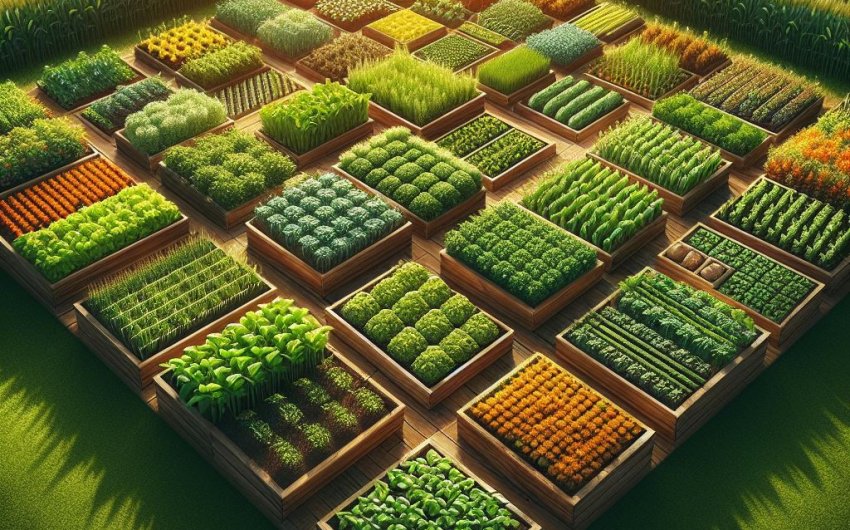
Exploring square foot gardening offers a remarkably efficient and satisfying way to maximize your harvest, even in compact spaces, making it a premier choice among space-saving solutions for home growers. This innovative method, which transforms traditional rows into precisely measured grids, allows for an incredibly diverse array of crops within a small footprint, promising abundant yields with less effort. Whether you have a tiny balcony or a sprawling backyard, learning to apply square foot gardening techniques can revolutionize your approach to growing fresh, delicious vegetables and herbs right at home.
What is Square Foot Gardening and why is it so effective?
Square foot gardening (SFG) is a simple, intensive gardening method developed by Mel Bartholomew. It involves dividing a raised garden bed into a grid of 1-foot by 1-foot squares. Instead of planting in traditional long rows, you plant a specific number of seeds or seedlings within each square, based on the mature size of the plant. This highly efficient approach maximizes yields in minimal space.
How does SFG differ from traditional gardening?
- Space Utilization:
- Traditional: Focuses on long rows with wide pathways in between, leading to wasted space and compacted soil from walking.
- SFG: Uses compact, organized square beds (often 4x4 feet or 4x8 feet) with no walking on the soil. Every square foot is a dedicated planting area.
- Soil Quality:
- Traditional: Often relies on existing garden soil, which may require significant amendment and can be compacted.
- SFG: Emphasizes using a high-quality, lightweight, weed-free raised bed mix (Mel's Mix, for example) that provides ideal growing conditions from the start and requires no digging.
- Water & Nutrient Efficiency:
- Traditional: Water and nutrients can be spread widely, sometimes inefficiently.
- SFG: Concentrates water and nutrients precisely where plants need them, reducing waste.
- Weed Control:
- Traditional: Weeds can be a significant problem in large, open rows.
- SFG: The dense planting, rich soil mix, and lack of walking on the soil naturally suppress most weeds. Any weeds that do appear are easy to spot and remove.
- Pest Management:
- Traditional: Pests can spread quickly through large monoculture rows.
- SFG: The diversity of plants in a small area can confuse pests and attract beneficial insects. Any pest issues are usually localized and easier to manage.
- Planning & Organization:
- Traditional: Can be more spontaneous, but sometimes less productive.
- SFG: Requires initial planning of what goes in each square, leading to highly organized and efficient planting.
- Yields:
- SFG: Offers significantly higher yields per square foot compared to traditional row gardening.
Why is SFG so effective?
- Ideal Growing Medium: The recommended SFG soil mix is light, fluffy, and nutrient-rich, providing perfect conditions for root growth and access to nutrients. This eliminates the need for tilling or soil amendments year after year.
- Optimal Spacing: Plants are spaced more closely than in traditional rows, but still with enough room to thrive. This close spacing creates a "living mulch" effect, shading the soil, reducing evaporation, and suppressing weeds.
- No Soil Compaction: Since you never walk on the garden beds themselves (only in narrow pathways around them), the soil remains loose and aerated, promoting healthy root development.
- Reduced Waste: Less water, fertilizer, and effort are needed because everything is concentrated in the small, productive squares.
- Simplicity & Accessibility: The grid system makes planning and planting intuitive, even for beginners. It's also ideal for gardeners with limited mobility as raised beds reduce bending.
- Crop Rotation Made Easy: The defined squares make it simple to rotate crops from one year to the next, preventing nutrient depletion and disease buildup.
By combining these principles, square foot gardening provides a powerful and practical solution for achieving abundant yields in a very efficient manner, making gardening accessible and rewarding for almost anyone.
How do I build a Square Foot Garden bed?
Building your square foot garden bed is the first exciting step in this efficient gardening method. The standard size is a 4x4 foot raised bed, which allows you to easily reach all squares from the outside without stepping on the soil.
What materials do I need for the raised bed frame?
The frame of your square foot garden typically forms a simple, open-bottomed box.
- Wood: This is the most common material.
- Untreated Wood: For longevity and safety, choose naturally rot-resistant wood like cedar, redwood, or locust. Avoid pressure-treated lumber made before 2003, as it might contain chemicals. Modern pressure-treated wood (ACQ or copper azole) is generally considered safe for garden beds, but untreated rot-resistant wood is preferred for purely organic gardening.
- Dimensions: You'll need four pieces of lumber, each 4 feet long. Common dimensions are 2x6, 2x8, or 2x10 inches, determining the height of your bed. A 2x6 provides 5.5 inches of soil depth, while a 2x10 offers 9.5 inches, allowing more room for root vegetables. For the original "Mel's Mix," a 6-inch depth (using 2x6s) is sufficient.
- Cedar raised garden bed kits are readily available and simplify assembly.
- Other Materials:
- Composite Lumber: Made from recycled plastic and wood fibers, it's rot-proof and long-lasting, but often more expensive. Look for composite raised bed boards.
- Stone/Brick: Durable and attractive, but heavier, more labor-intensive to build, and can absorb heat.
- Galvanized Metal: Increasingly popular, often as corrugated metal panels. They are durable and often come as metal raised bed kits. Ensure they are food-grade and won't leach harmful substances.
How do I assemble the bed frame?
- Cut Lumber: If not using a kit, cut two pieces of lumber to 4 feet and two pieces to 45 inches (to account for the thickness of the side boards when forming a 4x4 square). Alternatively, simply cut all four pieces to 4 feet and overlap them at the corners.
- Assemble Corners: Join the four pieces of lumber at the corners using galvanized deck screws (which resist rust). Use at least two screws per corner, drilling pilot holes first to prevent splitting the wood. You can also use corner brackets for raised beds for easier assembly and added stability.
- Place the Bed: Choose a spot that gets at least 6-8 hours of full sun daily. Level the ground where the bed will sit. Place a layer of cardboard or a few layers of newspaper at the bottom of the bed to suppress weeds initially. This will decompose over time.
What is the ideal soil mix for SFG (Mel's Mix)?
The specific soil mix is a cornerstone of square foot gardening. Mel Bartholomew developed "Mel's Mix" to be lightweight, nutrient-rich, and perfectly draining, eliminating the need for tilling or soil amendments beyond adding more compost over time.
Mel's Mix Recipe:
- 1/3 Coarse Vermiculite: This is a mineral that holds water and nutrients, and improves aeration. Do not use fine vermiculite, as it can be too dusty.
- 1/3 Peat Moss (or Coco Coir): Holds water and provides an acidic base. For a more sustainable option, consider coco coir, which is made from coconut husks.
- 1/3 Blended Compost: This is the nutrient powerhouse. Use at least 5 different types of compost from various sources (e.g., mushroom compost, worm castings, leaf mold, aged manure, backyard compost). This ensures a wide range of micronutrients and beneficial microbes.
Mixing Instructions: Combine all three components thoroughly. You can do this on a tarp or in a wheelbarrow. Mix until the texture is light, fluffy, and uniform. Fill your raised bed with this mix. A standard 4x4 foot bed with 6 inches of depth will require about 8 cubic feet of Mel's Mix.
How do I create the grid?
The grid is what defines square foot gardening. It allows for precise planting and easy organization.
- Materials: You can use thin wooden lath strips, PVC pipe, old Venetian blind slats, or even strong twine.
- Installation: Lay your chosen material across the top of the bed to divide it into 1-foot by 1-foot squares. For a 4x4 foot bed, you'll have 16 squares. Secure the grid in place by stapling, screwing, or tying it to the edges of the bed. Some gardeners prefer to leave the grid loose for easy removal, but securing it helps maintain its shape.
With your bed built, filled, and gridded, you're ready for the exciting part: planting your square foot garden!
How do I plan and plant my Square Foot Garden?
Planning is key to maximizing your square foot garden's potential. The grid system makes it easy to visualize and organize your crops for abundant yields.
How do I plan my garden layout?
- Know Your Plants: Before you even think about putting seeds in the ground, research the mature size and growing habits of the vegetables you want to grow. This is critical for determining how many plants fit in each square.
- Refer to SFG Spacing Rules: The core of SFG planning is how many plants per square.
- Large Plants (1 per square): Requires a full square for one plant. Examples: Tomatoes (use determinate or bush varieties for SFG, or trellis indeterminates), Peppers, Eggplant, Zucchini (bush varieties recommended), Broccoli, Cabbage, Cauliflower.
- Medium Plants (4 per square): One plant in each quarter of the square. Examples: Lettuce, Spinach, Marigolds, large herbs like Basil.
- Small Plants (9 per square): Three rows of three plants. Examples: Bush Beans, Beets, Swiss Chard.
- Tiny Plants (16 per square): Four rows of four plants. Examples: Carrots (choose shorter varieties for 6-inch beds), Radishes, Onion sets.
- Vine Plants (often 1 per square, trellised): While some large vines (like melons) aren't ideal, smaller vining plants can be grown vertically. Cucumbers, Pole Beans, and smaller squash varieties can be grown vertically using a trellis or netting at the back of the bed.
- Draw a Diagram: Sketch your 4x4 bed with 16 squares. Label each square with the vegetable you plan to plant and the number of plants. This visual plan helps avoid overcrowding and ensures you have a good mix of crops.
- Consider Sunlight: Place taller plants (like trellised tomatoes or pole beans) on the north side of the bed so they don't shade out shorter plants.
- Crop Rotation: Plan for crop rotation year after year. Don't plant the same vegetable family in the same square for more than one season. This helps prevent nutrient depletion and disease buildup.
Example SFG Planting Plan (4x4 bed):
| Row 1 | Row 2 | Row 3 | Row 4 |
|---|---|---|---|
| Tomatoes (1) | Bell Pepper (1) | Bush Beans (9) | Lettuce (4) |
| Zucchini (Bush) (1) | Spinach (4) | Radishes (16) | Carrots (16) |
| Cucumber (Trellised) (1) | Beets (9) | Kale (4) | Swiss Chard (4) |
| Marigolds (4) | Basil (1) | Thyme (4) | Parsley (4) |
How do I plant in the squares?
Once your plan is ready and the danger of frost has passed (for warm-season crops), it's time to plant.
- Prepare the Square: Gently pat down the Mel's Mix in each square you're planting to create a slightly firm, level surface.
- Create Planting Holes/Divisions:
- For 1 plant per square: Plant in the center.
- For 4 plants per square: Divide the square visually or physically into four smaller squares and plant one in the center of each.
- For 9 or 16 plants: Use a ruler or stick to create a grid within the square and plant at the intersections.
- Planting Seeds: Follow the seed packet instructions for planting depth. Make a small hole or furrow, place the seeds, and lightly cover with Mel's Mix. Gently water in.
- Planting Seedlings: Dig a hole slightly larger than the seedling's root ball. Gently remove the seedling from its container, place it in the hole, and backfill with Mel's Mix. Firm lightly around the base. Water thoroughly.
- Labeling: Label each square as you plant to easily remember what's growing where, especially for seeds that take time to germinate. Waterproof garden markers or plant labels are helpful.
This meticulous yet simple planning and planting system is what makes square foot gardening so efficient in producing abundant yields even in limited spaces.
What are the ongoing care tasks for a Square Foot Garden?
While square foot gardening reduces some traditional garden chores, it still requires regular, focused care to ensure continuous abundant yields. The key is to be proactive and attentive to your plants' needs within their individual squares.
How do I water my SFG?
Efficient watering is a hallmark of SFG, thanks to the excellent drainage and moisture retention of Mel's Mix.
- Deep & Focused Watering: Water individual squares rather than broadcasting water over the entire bed. The goal is to moisten the entire depth of the root zone.
- Watering Frequency: Mel's Mix retains moisture well, so you might not need to water daily. Check the soil moisture by sticking your finger an inch or two into the mix. If it feels dry, it's time to water.
- Avoid Overhead Watering: Try to water at the base of the plants using a gentle stream from a hose or a watering can with a rose attachment. This minimizes leaf wetness, which can reduce fungal diseases.
- Drip Irrigation/Soaker Hoses: For larger SFG setups, a drip irrigation system or soaker hoses designed for raised beds can provide efficient and consistent watering directly to the roots, saving time and water.
What about fertilizing and soil replenishment?
Mel's Mix is designed to be nutrient-rich, but continuous harvesting means plants are taking nutrients from the soil.
- Compost Replenishment: After each harvest in a square, top off that square with a generous handful of fresh blended compost. This replenishes nutrients and organic matter naturally.
- Liquid Feed (Optional): For heavy feeders (like tomatoes or corn) or if you notice nutrient deficiencies, you can occasionally supplement with a diluted organic liquid fertilizer (e.g., fish emulsion or kelp meal) during the growing season. Follow product directions carefully.
How do I manage weeds and pests?
One of the great advantages of SFG is reduced weed and pest pressure.
- Weed Control: The dense planting in SFG shades out most weed seeds, making weeding minimal. Any weeds that pop up are easy to spot in the neatly gridded squares and simple to pull by hand due to the loose soil mix.
- Pest Control:
- Diversity: Planting a variety of crops in a small area can confuse pests and encourage beneficial insects (e.g., ladybugs for aphids).
- Companion Planting: Plant beneficial flowers like marigolds (tagetes marigold seeds) or nasturtiums (nasturtium seeds) in some squares to deter pests or attract beneficials.
- Manual Removal: Inspect plants regularly. For small infestations, hand-picking pests is often effective.
- Organic Sprays: If necessary, use organic pest control options like neem oil spray or insecticidal soap.
- Disease Prevention:
- Air Circulation: Maintain good air circulation by pruning excess foliage if plants become too dense, especially for tomatoes.
- Watering Habits: Avoid overhead watering to keep leaves dry.
- Crop Rotation: Change what you plant in each square every season to break disease cycles.
What about trellising and vertical growth?
Vertical growing is essential for maximizing space in an SFG.
- Trellises/Cages: Install trellises, cages, or netting (garden netting) at the back or sides of the bed for vining plants like cucumbers, pole beans, indeterminate tomatoes, and small squash.
- Training: Guide vining plants up the support structure as they grow. This keeps plants off the ground, improves air circulation, and makes harvesting easier.
Consistent and thoughtful care ensures your square foot garden remains productive, providing continuous harvests from your well-organized space-saving solution.
What are the benefits of Square Foot Gardening?
Square foot gardening offers a multitude of advantages that make it one of the most popular and effective space-saving solutions for growing vegetables, especially for home gardeners aiming for abundant yields with less fuss.
What are the advantages for new gardeners?
- Simplicity: The grid system breaks down gardening into manageable, bite-sized pieces. It's easy to understand spacing, and the process is less overwhelming than traditional large-scale gardening.
- High Success Rate: Because of the ideal soil mix and focused care, plants in SFG tend to thrive, giving new gardeners confidence and encouraging them to continue.
- Lower Initial Investment (relative to yield): While building the bed and buying soil mix is an upfront cost, the efficiency means you get more food per square foot, making it cost-effective in the long run.
- Less Guesswork: The clear instructions for planting density in each square take away much of the uncertainty of traditional spacing guidelines.
What are the advantages for experienced gardeners?
- Maximum Yields in Limited Space: For gardeners with small yards, balconies, or limited sunny areas, SFG allows for incredibly diverse and productive harvests where traditional methods would fall short.
- Water Efficiency: The dense planting and organic-rich soil mean water is used more effectively, reducing overall water consumption compared to widely spaced rows.
- Weed Control: Significant reduction in weeding time is a huge benefit, freeing up time for other garden tasks or simply enjoying the harvest.
- Pest and Disease Management: The diversity of crops and the focus on healthy soil can lead to fewer widespread pest and disease issues.
- Accessibility: Raised beds are easier on the back and knees, making gardening more accessible for people with mobility challenges.
- Neatness and Organization: SFG beds are inherently tidy and well-organized, adding to the aesthetic appeal of your garden space.
- Easy Crop Rotation: The defined squares make it incredibly simple to rotate crops each season, which is a vital practice for soil health and pest/disease prevention.
What are the long-term benefits?
- Sustainable Practice: SFG promotes healthy soil, reduces water and fertilizer use, and lessens the need for chemical interventions, making it an environmentally friendly choice.
- Consistent Production: With careful planning and succession planting, you can enjoy fresh vegetables and herbs almost year-round, depending on your climate.
- Reduced Labor: Less digging, less weeding, and less watering (due to efficiency) mean you spend less time on strenuous garden chores and more time enjoying the fruits of your labor.
- Community and Learning: The popularity of SFG means there's a vast community of resources, books, and online forums to learn from and share experiences.
Choosing square foot gardening as your space-saving solution is an investment in a more productive, manageable, and enjoyable gardening experience, leading to truly abundant yields season after season.